Thursday, August 11, 2016

Keeping Yourself Above Water: Entertainers Avoiding Bankruptcy

It is hard to talk about this topic because it is a rather personal one that combines elements of professionalism and my personal life.

There are a few things that I am sure of every year; that I will hear about fushigi and that I will hear about another entertainer who has lost everything and is going bankrupt/belly up.  It is also a position that I have found myself in as well.

There was a period of time that I was unable to find work; every interview carried with it the question about the fact that I was a part time entertainer.  In looking back I lost several job opportunities because potential employers thought that hiring a part time entertainer was a liability. 

During that time I only was able to get through it by the skin of my teeth and the help of loved ones and I learned a few things.   Entertainment professional need to learn  financial planning and how/when to reinvest in the show.

#1 Separate the hobby from the job.  


Of the props and tools that I own; I only use half of them regularly.  I use another quarter of those props semi-infrequently.  This leaves about 15-25% of my collection as a wasted collection.  What I learned from my experiences is that I need to treat my purchases as investments rather than impulse purchases for my hobby.  This will save you a lot of wasted money down the line. 

Playing with magic is fine, but when your living is based on the amount of money you spend on it treating it a bit differently goes a long way.  It is very easy to delude yourself into justifying a bad purchase in the name of a business expense.

#2 Know What You Need


Plan your life; a lot of the performers I know live from double incomes with a spouse or significant other and can plan around the lean times.  Other performers live out of country during their dry season.

The basics are this; we live on an indeterminate amount of money where we have amazing months and terrible months.  We need to be able to save money during the amazing months so we can get through the terrible months.

Most events who book entertainers such as ren faires/ convention circuits/ etc normally plan their entertainment around six months prior to the date in question.  When I ran the numbers I realized that I needed enough money to make it through six months in order to have enough time to start booking large scale gigs and make it onto the convention circuit/ ren faire circuit.

More importantly you need to have the connections required to do so.

#3 Do not live on the well wishes of others.

I want to ask a question; What is holding you in place?  What is keeping you afloat?

I have a full time job that pays my bills,  I have a legal agreement with a landlord that keeps me in my home,  I have a legal agreement that provides me with a vehicle, and I have the ability to maintain it and keep on the road.  My ability to be a performer and live life is not at the kindness or courtesy of someone else.  Just think about it.

Monday, August 17, 2015

Why Facebook Advertising Won't Help You As An Entertainer

"We are beggars begging from beggars"

As a rule of thumb I almost never post my upcoming shows to my fellow performers or to any groups that are populated by other performers.  But this seems to be the current model of entertainment in the city that I live in; Philadelphia:

" That if I come and support your particular brand of art then eventually 
you will give me a chance at using my particular brand of art in your show
and/or at your venue"

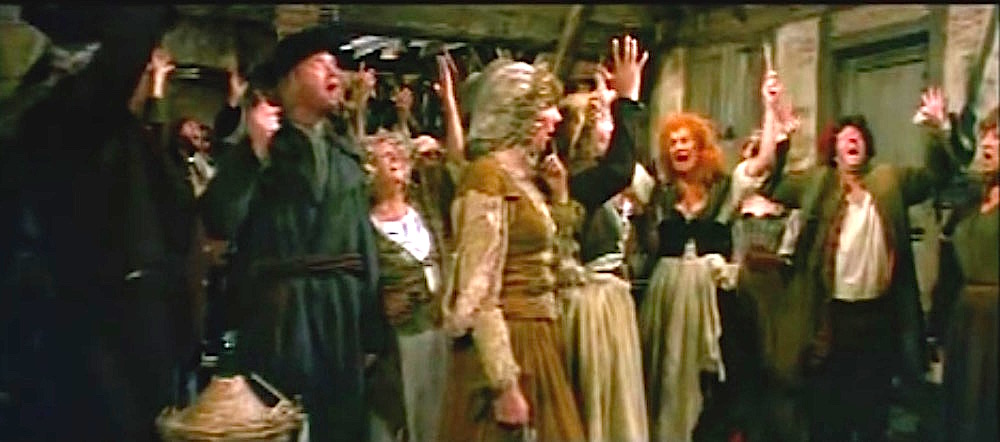
In the movie "History of the World: Part 1" The scene in which the peasants decided to revolt was highlighted by the line that they were beggars begging from beggars to show how badly that they actually had it.  In the same way if any of our promotional material or our advertising is trained at fellow performers; then there is in no way any real expectation of being able to get off the ground.

To use a mathematical model, a group of performers performing for other performers only works if all goods, services, and needs are met by that particular group. ((In other words; if they are self-sustaining)).  But we buy our food at Whole Foods and shop for our clothing at the mall/thrift stores.  We pay our land lord and our various bills.  It is therefor impossible to be self sustaining as a group.  

This means that this particular model of advertising and creating shows is ultimately not self-sustaining and any advertisement for our shows is and should be aimed at the mainstream.  When we sell ourselves on facebook we do so by what are commonality related posts in the same way that Amazon offers you suggestions on what to buy based on previous purchases.  So if I go to a lot of pagan web pages and buy a lot of athames/sage then it makes senses to advertise a new pagan website/ ren faire/ etc because I will post about a lot of things found at these places.

But the people posting flow art/circus arts, googling the word "juggling club", and making purchases of clown make up on amazon in sufficient qualities to flag for facebook advertising are those individuals who are already doing the same thing we are doing.  Therefor paying for advertisement or making a point of advertising solely to other performers only serves to continue this basic and not make any actually head way.  It would better to spend your money on a search service to make your website pop out or your youtube video so that is a "suggested" video.

Tuesday, July 21, 2015

Three BIG Tips For New Entertainers

Over the last few months I wanted to write a small set of "things" to keep in mind as you begin work as an entertainer.  I had some difficulty coming up with what I felt were "BIG" things that would be universally true as an entertainer....

But I feel these three are important and that they stand as something that all people who work in entertainment should keep in mind as they develop their acts.

1-Know what you are selling.
What do you sell?  I mean we all sell entertainment;  so let me be more specific what is the premise that your selling and what is actually entertaining the audience.  If you are selling sensuality and teasing those who find you gorgeous then you might be practicing burlesque...........


.....or you are a female magician (don't knock it; it probably gets her work).

When you create acts you are selling something; that something should make sense to the audience in regards to what your selling.   Some of Criss Angel's work is beautiful; sometimes watching him act like a demon possessed to get a card through a window is hysterical.


One of my favorite acts was watching two eyeliner wearing goth boys performing pressure at a practice session..  I found it hard not to laugh watching two very serious men in very gothic attire give the same expression that they would give for swallowing a sword or needle to squeezing a balloon shut.
And while we are on the topic.......
What you know your selling and what you think your selling should always be the same thing.  If your selling "art" and your audience is watching "sexy boylesque" then the moment your art has nothing to do with your body your show is done.
This also means know the worth of what you are selling.  Or you could always be the next free contestant on the television who isn't getting paid jack. If you sell under price,  then that sends a message to the person booking you that they should be able to get everyone under that price.  But I already covered that in a previous article..

2-Do not over step your reach.

When you overstep your reach in sports you whiff on a fast ball or fall on your face.  When you whiff in fire breathing......

http://www.nbcphiladelphia.com/news/local/Caught-on-Cam-Fire-Breather-Catches-Fire-During-Tattoo-Convention--292032161.html
.....you get a bottle rocket.  There has been plenty of conversation on what went wrong in this video so I don't feel it necessary to comment.  Needless to say that there was a serious lack of safety and training.
When a juggler drops, he loses the crowd.  When a magician drops......

......that effect is ruined for the audience (as well as other effects that have similar methods) and other magicians have to start taking the effect out of circulation.  When a fire performer fails and hurts themselves or others; fire performers everywhere get nailed by the cost of what one person did.
There is a young man I know and performed against in a competition who decided to do glass walking as a part of the act.  He learned it from Brian Brushwood's video series on YouTube a week prior to this show.

He didn't size his tarp down correctly and also used about 2 trash bags of confetti.   In his haste to clean it up he managed to spray the entire front row with pieces of glass from his act.  Thankfully the entire front row was a group of burlesquers who knew the act and so weren't hurt.
You need to spend a lot of time training, and practicing your routines.  If you don't practice these routines and methods you end up creating accidents and mistakes that will not only end up costing you but also end up costing other performers.  The secret to these effects and stunts isn't in knowing how they are done(the gimmick) but in the time to develop the safety and skill necessary to pull them off without making such mistakes that can be corrected with proper training and safety.

3-Don't Base Your Act On The Culture
Every discipline in the world has a culture;  and with the culture comes expectations....for instance magic is what is generally referred to as an old man's club.  The first time I attended a IBM meeting 75% of the room was old, male, and white.  The only woman in the room where catering the food or sitting with their husbands like good ol' wives. Cause you know it isn't like magicians are sexist or anything right.

Every culture carries with a set of expectations and also a set of criteria for what makes a good show.  But here is a sad truth;  the culture doesn't pay you.  The normal audience who want their kids to have a good birthday,  the men in the front row staring at you like a piece of eye candy,  the corporate client who wants their audience to have a feel good vibe.  These are the people who pay you;  the jugglers, the magicians, the entertainers....

These are the people you learn from and network with.
I know maybe 50 entertainers of different calibers and skill level.  Only two of those individuals have ever thrown me a financial bone (meaning a paid gig).  Half of them have asked me gigs and half of them have asked for favors.  I pass what I can.
A running joke is as follows-
Two magicians are sitting down at a club one night and talking shop.  One of them is a world famous entertainer who has been booked repeatedly for cruise liners, amusement parks and corporate events.  The other one looks at him and mentions that he does birthday parties.  To which the world famous entertainer says "who is booking those".?

Not to scream the point:
EVERY PERSON WHO ENTERTAINS HAS TO LOOK OUT FOR THEMSELVES FIRST

The only way to make money from other performers is as a teacher or as a manufacturer/booking agent.


You can perform for them; but they will never pay and for as much as they will judge you on showmanship.  They will also judge you on technicality and originality of movements....in fact juggling for jugglers or doing magic for magicians can be compared to the new scoring system for figure skating....

http://www.howcast.com/videos/317576-how-to-understand-the-olympic-figure-skating-scoring-system/ 
http://www.csmonitor.com/2006/0213/p11s01-alsp.html

If you limit yourself to only what you think the culture of juggling will accept or the magicians or burlesquers will accept and give you...then you are only hampering your capacity as an entertainer.

 At the end of the day the greatest determination of skill is how successful you are which means playing all sides.

Wednesday, April 22, 2015

The Why and Why Nots of Free Performances (for those just starting out)

Dealing with the freebies

If you are around artists, have a friend who is a DJ, or entertainers of any sort than at some point on Facebook you have seen one of these rants: 


Yes, the "You should not work for free" rant: which honestly has a lot of valid points.  But there are some valid reasons for doing free shows and there are also a lot of giant warning signs that you should bear in mind.  Some of the best shows that I have ever done have been free shows and some of the worst shows that I have ever done have been free shows.  So here is a few thoughts on the topic of doing free performances.  There are some valid points and some alarm bells.  Keep in mind that many of these are for new entertainers.

#1 Payment doesn't always mean money.

    This summer a rather large sum of cash will literally be flying out of my account for no other reason than to have someone with decent equipment follow me around for a day and taking video of me performing a number of act's through out the city of Philadelphia for the purposes of creating a promotional advertisement for my show to ship to various ren faires and prospective agents.  There are a large number of things that go into being a performer and entertainer that can be difficult to do.  Website design, photography, business card design, video editing.  All of these can make or break you on getting working gigs as well.  And all of these can cost a fortune as well. 
    A decent camera rig can easily cost well over a thousand, it takes a while to develop the necessary skill and knowledge to create an effective and interactive website for prospective client, and it takes a very good eye to take quality video  So whenever I get a chance to get a show where these things are included I always do so and try to include access to raw footage as a feature of the contract.  But if someone want's to do a payment-in trade; then even though that's not cash it can easily be worth it.  Especially since so many of artists are only as good as our word.  I have a lost a few contacts because someone broke their word to me and left me hanging on the book (which in turn caused me to break off arrangements; which means i am persona non-Grata in a few places).  I have also bartered for a few things on the notion of a "I owe you a favor".
    Every year I try to make sure I perform at juggling festivals because while I don't get paid for it (I am not what you would ever call a head liner juggler) the festivals almost always make sure that there show gets a video graphed and the ability to do that is honestly worth it's wait in gold (Because getting video of you on a stage to a really happy audience is always good for a promotional clip).  Also getting the chance to work a stage show without worrying about the crowd getting angry or upset(or a venue owner getting angry or upset) is also a needed experience.
    It takes time to develop a stage show and unlike comedy; there is no such thing as a juggling open mike.  It either works or it doesn't; so festivals are an amazing place to go and perform a stage show (which allows you to do stuff you can't do on a street during a busking show) to allow you to work out the bugs.  And this is worth it's weight on gold-pressed latinum (and yes I am a total star trek geek)

#2 What actually constitutes exposure

    The number one line that I am exposed to when it comes to the freebies is that what I will be doing will constitute exposure.  Exposure is sort the mythic monster that performers live and deal with on a constant basis....and I hate it.....and need it.  But exposure needs to be defined.

~Exposure is any instance or event that will put you in front of people that will either be intersted in furthering your work, promoting you, or hiring you.

Are the people whom you are interacting with or performing for actually in a position where they would be interested or are capable of hiring you? 
    -I enjoy performing for people who are appreciative but like everyone else I do need the capacity to live and so while bringing the art's to the groups that may not necessarily get it is a wonderful gift.  It would turn me into the starving artist.

Are you showcasing your brand (or the promoters)??
    -Promoters will often promise to people that entertaining or performing at their event will result in them being exposed; however without your brand being recognized as something separate from the event planner/promoter all you are showing is the promoters brand.  Part of this is you having the necessary tools and equipment to showcase a brand (Business Cards, Promo Packets, a sign for the show on the stage).  Part of this also means the kind of promoter that you are working with and what they are willing to accept.

Is the "exposure" something that will go beyond the event?
    -If everyone see's you but nobody actually remembers your name.  Than I would never call that exposure, I mean yeah you exposed your art form.  But you yourself was not given exposure.  No one actually remembers you after the event or outside of the event.  Exposure that exists outside of the venue in the form of television recordings, YouTube/FaceBook videos, and news articles will carry you far beyond the event itself.  Because people will see that article and it will "frame" you in a very specific way that highlights what it is that you do and why you actually do it.  And press is great advertisement if it allows people to find you.

If none of these things are actually happening then your are not being paid in exposure, your doing something else.

#3 The ability to try out new material

Comedians have the luck of having so many open mike nights venue were they can go ahead and try out material that they have created for a mixed crowd of lay people and fellow comedians.  For those who have incorporated circus and illusion into their act's this is a bigger challenge.  I use free shows as a way of trying out new routines where I don't know if they will or will not go well.  That way if it is not a five star then there is no reason that the person who brought you on will be terribly upset because your sacrificing your time and money towards a free show.  These shows are necessary while you are developing your act.

#4 What are they really getting out of you?

This is a question for the venue and for the performer.  A while back an open letter to Oprah from a hoop artist went viral.  She was asked by one of the richest companies in the world to do a show for them "for the exposure" on a side stage because a big-wig wanted to feature local entertainment.  The question that I always ask myself for a freebie is "what" is the promoter/person who asked me to be there is getting.  I am a softy so when it is a performance for a a real non-charity to help those who would otherwise not get such things I am far more willing to do so.

I have issues when I run into a promoter who is essentially getting a discount, they want all of the benefits of having entertainment but they want to keep more money in the black (or they have a bad business plan that doesn't take into account entertainment).  This might be phrased in terms of competitions/contests, "exposure" (blech), or future "gigs".  But if at the end of the day it is simply a matter of wanting more black ink for themselves then this is a promoter who is using you in order to do better for themselves (regardless of the poor planning on their part)

Last summer I did a church project for an inner city gospel church.  The music was wonderful,  but the parents abandoned their children who out of being bored and abandoned simply came over to me and then proceeded to inspect, grab, touch every single article or tool I had. This was to the point that a parent had to be asked to come over and grab two children who decided they were going to sword fight with juggling swords, sadly no pirate "R's" were exchanged and no broken noses/split skin.  I wasn't asked to be an entertainer for the event.....what I was asked to do was to be a babysitter and I am not doing that for free.  Though I still find it funny that there was a crowd of full of people praising Jesus while their children were 50 feet away and raising hell.

Tuesday, November 4, 2014

Your "First Routine"


I want to talk about, what is for me, the hardest part of the actual show.  It is not creating novel routines ,dealing with the venue, or handling hecklers; those are easy in comparison to the first “routine” that you do during a show.  I normally don’t have the benefit of either having someone who warms up the audience for me or the benefit of having enough of a reputation that people already know who I am before I even start the show.  So I have to “earn” my audience’s attention.
The traditional tactic of entertainment, and I hear this a lot from musicians, is that your first bit of material should be your second best routine.  But my response to this is now; “best at what”?   The act of performing variety entertainment, especially anything that smacks of illusion or danger,  can very easily take on an “adversarial” tone to many audience members.  They might think everything I am doing is fake or that you shouldn’t play with fire. 
In circus arts, the performers refer to those scripted moments of a show that are designed to elicit applause and cheers as “applause points”.  In illusion I have heard these moments as being referred to as “moments of amazement”.  But neither of these are really guaranteed to make the audience want you to succeed or support your successes during your show.    So your second best “moment of amazement” might only service to reinforce an adversarial tone or distant tone to those audience members.
What I focus on in this first routine is not my moment of amazement but my “moment of connection” to my audience.  I choose something that not only will make my audience laugh, applaud, or cheer but will more importantly connect “me” to them in some way.  I will sacrifice sheer awesomeness of a routine for a different one that helps create or give this “feeling” or “notion” of being connected to an audience.   This serves a number of purposes for me
  1. -      It relaxes me.  The moment that I feel a crowd is supportive of what I am doing any of the pre-show stress I feel usually goes out the window.
  2. -      I have a buffer zone.  I am a juggler on top of everything else; this means that I do occasionally screw up a trick.  If the crowd is supportive of me they are more likely to actively want me to succeed.  If a crowd is adversarial the act of dropping means that I lose a lot of the interest that I had built up because they were interested in seeing the “tricks” rather than the performance.
  3. -      It is easier to deal with hecklers, if a crowd is more interested in me than I am doing with my hands then the crowd will be a lot less supportive of hecklers if they should pop up.
  4. -      It sets the tone for the rest of the show.  Creating that moment forces me to “choose” what kind of show that I am going to do so that I don’t drift off center doing the show..
  5. -      I am longer the guy “showing” off.  I am the entertainer.


What these moments consist of change depending on the individual and the type of entertainment.  I found  that making light of some of the “paradoxes” of being a juggler and an illusionist was what worked for me in this way for some types of shows that I did.  For other types of shows I have discovered other “methods” that accomplished the same thing.

Some Food For Thought

Sunday, July 20, 2014

Why Entertainers Can Be So Expensive Part II: Revenge of your questions.

I received a lot of feedback over the last week about my article on “Why Entertainers Can be So Expensive” and there are two responses I got that I really wanted to respond to.


The first question relates to the concept of “Star Power”; or the capacity (to quote the original source) to put butts in seats.  The notion that a performer’s worth is really only in his capacity to put butts in seats.


The second question relates to pricing and “special” deals”.  It’s a question of interacting with venue owners, individuals who want to hire your services, etc.


#1 Star Power


Star Power is the capacity for performers to put butts in seats.  It’s the difference between saying the name Mr. Massado and the name Penn Jillette or if showed you a picture of the chainsaw juggler from the Geico add or Anthony Gatto.  If you talk to someone in the industry and say both names chances are both will be recognized.  But chances are your doctor has never heard of the man who put Linking Rings back into the public eye or the most technical juggler of our generation.

Star Power works really well when the only reason you are going to the event is to see that person.  I would have ticked if John Water’s Christmas special had some other guy up there for 45 minutes of the hour long show.  Adam Sandler made a movie a few years ago about Star Power called Funny People that introduced a really strange idea.  That if your popular enough for being funny than everyone assumes that what you say is funny even if it really isn’t.  It’s sort of the Emperors New Clothes but in reverse.  Everyone thinks the clothes are there but the Emperor knows there not.

Star Power isn’t necessarily related to the entertainers actual capacity to entertain (though most of the time it is; google Criss Angel and stooges for more information and internet arguments).  Promoters often use Star Power in order to spread the word about an event and bring people in the door.  But there is an exception to this.


festivalprose.com/playing-by-the-numbers-part-1-patron-vendor.html


The link is to a blog on venders and ren faires about making actual money at ren faires and discusses techniques to deal with the various problems that come up.  But the nitty gritty is this; ren faires don’t actually make enough money from the door sales.  They make their money from vendors paying fees in order to set up shop and also attempt to make money.  The longer a patron is at a fair; the more likely they are to purchase something.  


The purpose of an entertainer at a ren faire is to give the patrons something to do in between shopping trips.  Normally this has nothing to do with that entertainers “star power” and everything to do with their capacity to entertain.  Occasionally, a ren faire will bring in a special guest star on a weekend to take advantage of “Star Power” but usually that means one “thirty minute- hour set” with another 5-6 hours of time that others have to cover.

Different businesses cover different models.  A good entertainer does not need to have “star” power in order to justify his cost.  But he does need to know his market and what his market wants.  I deal primarily with what I refer to as “Normals”.  These are just average run of the mill folks who want to hire an entertainer for something.  I also occasionally work out of ren faires, steam punk cons, and some of the associated groups with those.  They have a pre-existing reputation and name that I can trade in in order to bring people to my show (though there is another article about dealing with rennies, steam punkers, and associated jaded audiences versus normal people).


The issue frequently is that the justification for some of these events (in my experience ren faires tend to be really fair but fairy fests and steam punk; not so much) for paying me is “How many people can you bring us”.  The truth is that this motto is every where.  If you don’t believe just think about how many facebook event invites you have had from people trying to bring you in because they are expected to bring people in.

So my response is this,  what is your business model and how do you plan on bringing money in.  If your model is “ticket sales”, then paying someone more who can bring in 500 guests is more important than paying someone who can bring in 50 guests.  But if your model is, say the ren faire model,  than the quality and length of entertainment become far more important than just the pizzazz factor (at least in the current steam punk climate) of seeing someone you love for thirty minutes.


#2 How Much Does Your Show Cost.


I was asked after writing the previous article, how much I generally charge for my show (which is in many ways a giant social foopah and therefore you should not ask if you are in competing markets so I will not answer again).  I rarely actually tell my clients how much I charge.  I have in the back my of my head, an idea of how much cash I need to earn before and after taxes. I normally never list this number unless I am explicitly asked.  Normally I prefer to be given an offer and if it’s fair and reasonable I will take it (or counter offer).


This idea in my head is pretty much I feel that I am worth, what the customer is capable of paying, and what I would have to do.  I translate it into a question of how much time I would spend on this project and therefore think of it as an hourly rate.  I don’t normally tell clients that it is an hourly rate unless of course it’s something where I am being left to my own devices for an hour.


Negotiating prices and follow up shows is sort of a like a magic trick where you don’t actually tell your audience what you're going to do until the very end.  This gives you more out’s, more options, and more possibilities. If there is a reason they might bring me back or more work that might come out of it and I feel the need to play the "price reduction card" then I can play it. But if there is no need and I do so anyways (because I "want the sale") then I have just limited my options because if you have offered a cheaper sale then I can't go back on that. A lot of the people you are going to be interacting with will have little appreciation for your talent and a great deal for how much you are going to cost them. So keep that in mind as you negotiate.

Friday, June 20, 2014

A Trick Versus An Illusion: Illusion as a form of art.

I wanted to talk today about the difference between a trick and an illusion.  Many demonstrations of cardistry and card illusions come off as more tricks or displays of skill than they do as a form of illusion or "magic" (From here on I will use the word illusion as I prefer it).  I will also use an artistic concept from a modern art philosopher (Arthur Danto).

Artists use lies to tell the truth. Yes, I created a lie. But because you believed it, you found something true about yourself- "V: V For Vendetta"

There is a vast difference between doing a show for kids and doing a show for adults.  Far more seldom do adults that I perform illusions for believe that an act of illusion is actually something else than a child does (This gets into the topic of mentalism and belief structures).  The quote that I used above was written by Alan Moore and in a way gets into the topic that I want to talk about.  

One of the primary differences between using illusion and juggling on stage is that illusion in many ways seems to act as a voice as an idea independent of the illusionist own words.  If I were to use a modern philosopher's words illusion can be a work of art in the sense of what Arthur Danto refers to as a metaphor.  A metaphor is when a creation of the artist stands in for an idea or statement of the artist.  For example a blank canvas may represent an artists inability to create.  The artist is attempting to communicate an idea via his artwork standing in as a metaphor.

If I present illusion as a method of simply demonstrating my own expertise and capacity (within the persona of the expert), I demonstrate technique but I don't demonstrate artwork (I feel that technique is not necessarily artistry but rather the capacity to create art).  The moment that I use illusion for this purpose, no matter how entertaining the trick is, it is still a trick.  The power of illusion here is in creativity; to often though we simply ctrl-c ctrl-v someone elses creativity and put it forward as our own success.   How and why do I place it before the audience becomes more important than what I place in front of them.

When we enter the theater the goal of the theater is to create within us a state of suspension of disbelief.  This of course to me equally applies to stage illusion and shows as it does to traditional theater.  In this way my goal is to use the lies of illusion in order to demonstrate a truth as I perceive it.  In suspending ones disbelief if only for a moment, than the metaphor of each act of illusion becomes more acceptable; more capable of hitting home.

Wednesday, May 21, 2014

The Two Drives Of Performing

One of the greatest challenges that I have as a performer is balancing the two drives that make me do what I do.
~The need to create something that I find beautiful and amazing
~The need to be admired

Many aspects of the artworld since the end of World War 2 and the rise of pop art during the time of Andy Warhol and such have become more like forms of entertainment rather than objects to be admired.  With the rise of installation pieces and performance art in many ways the nature of art has changed and what drives the artist to create has changed.  A performer who I often refer back to from philadelphia, David Darwin, ends many of his acts with an idea.  That what he creates isn't necessarily entertainment, but something for people to talk about.  That when people see his show it allows them to connect to each other in a way that they might not necessarily be able to do.  The role of the performer, the entertainer, becomes incidental to the nature of the entertainment itself.

In this instance what David has done is to share something beautiful and amazing with an audience so that they can appreciate it and talk about it and share in that conversation.  When I started juggling and practicing fire performance this is what drove me to become a performer and is the reason that even if I were to travel half the world away and have no one to perform for; I would still make sure that I had a small little bag with juggling equipment (and at this point in my life a deck of cards as well).

However, I have to admit, being admired and praised is one of the biggest drugs that I have ever experienced.  I can understand why a comedian keeps coming back, that feeling of being loved and admired; well, it feels good.  In fact, it feels incredibly good.  The first moment I realized what it felt like I was coming out of a bar in northern philly were my act consisted of (among other things) my fire contact juggling routine.  As I was coming out I was stopped and asked for some photos and handshakes.  That feeling of being praised was powerful enough to keep me happy for weeks.  

When you spend weeks developing a routine and practicing until your sick of it; being praised for it an amazing feeling.  I got a chance to meet Daniel Hanson Danson a local "celebrity" sideshow artist.  He looked at me and said that in sideshow the only kind of magic a person should do is "comedy" style magic (as well as comedy style sideshow in general).  Some people refer to "lowering" your style of performance as playing to the crowd.  In modern entertainment this is done frequently by danger, sex, and physical humor (What Danson was referring partially to),

Honestly if you play to the crowd,  you are essentially traveling down the same road as so many other performers have done before.  The crowds become essentially jaded to this approach and the viewpoint on what entertainment is capable of sinks.  Until of course you are reducing art to comedy and tragedy in order to get a rise out of the crowd.  It is easy I believe to become a performer who relies on these sorts of styles in order to get that praise and admiration, but it feels and seems like an endless hole in the artistic community (and I think this theory could be applied to other mediums as well). 

The only other option then is that love for the performance itself and learning how to meet the crowd half way in terms of what you present.  I know that this is the harder way to travel,  but I feel it is far more rewarding for society seems to reward novelty and creativity in the community though the community only sees the aspects that sell sexuality, violence, and their cousins.

Wednesday, November 27, 2013

Technique And Presentation/Style

When you google the word "Best Juggler" you find that the first three entries are for a man named "Anthony Gatto".  This is a man who works for Cirque D' Solei, holds numerous records in juggling, and is without a doubt truly amazing.  What you will also find that he is referred to in the community as the best "technical" juggler, which makes me ask the question "What is the difference between a technical juggler and a "normal" juggler"?  I don't think that there really is a difference but rather instead the question here is why do we say this sentence.  Rather in many artforms such illusion and object manipulation there is a growing trend in which we are more likely judged not on form of presentation but rather instead technique of presentation.

Technique stems from the green word techne meaning "craft/manship".  When we talk about the technique of a particular art form we are discussing the necessary skills in order to do certain things.  This is your brushstroke,  your ability to do various patterns and juggling while isolated from the ground, your method of glazing pottery,  your ability to do a "classic pass" or a "hindu shuffle".  These are all  examples of "techniques".  If something is a technique then we can say that they can normally be taught in form or another and that they can also be compared and judged to other users of the technique.

This is different from what we might call "presentation/style".  Don't get me wrong there are techniques for how to talk in front of a crowd but while those are techniques of presentation they are different from what I am talking about.  When you present a work of art, an illusion, etc there is usually a "way" in which you do so.  Often enough if people look at many of your works of art they will see similarities between them and they might refer to this as your "style".  How you choose to interweave your various techniques to create a demonstration of/or attempt at art can be considered your style of presentation.

It is difficult to argue about which style of "presentation" is better or worse,  it happens but seems that eventually such arguments are reduced down to I "feel" statements.  The arguments are those of subjective personal statements like "I feel that Gatto is a better juggler than so-and-so" or " I think Francis Menotti (an illusionist out of philly) is an artist in his craft while so-and-so is just a hack".  There are trends that do occur and certain styles of performers will emerge as a whole.  In this way it easy to go back to technique as a judgement criteria,  "I feel that Gatto is a butter juggler than so-and-so because he is able to juggle seven rings and bounce a ball on his head".

The act of demonstrating technique is itself a presentation of sorts.  In this way the lines between presentation/style and technique become blurred especially within the walls of illusion and juggling.  I can't comment on anything else (but I assume there are instances of this).  Within juggling any act of juggling is itself a presentation and therefor technique and presentation are difficult sometimes to determine while in illusion the presentation is often enough used to cover technique and so "blocking" is technique and once again it is hard to determine.

It is relatively easy to comment on the notion of technique,  but in a display of art and skill technique is only half the battle.  I understand that there are some performers who are known solely for their technique and that there performers who are known solely for their style of presentation but both of them are using the other half.  Gatto's style of creating "challenges" in order to demonstrate talent with juggling without actually having to create much "artistic" flavor allows him to use technical juggling primarily for instance.  While he is a "technical" juggler his style allows for that.

So I argue it is not the best of ideas to reduce grading criteria of a routine down to technique without talking about the method of presentation as well.  

Wednesday, November 13, 2013

Supply and Demand In Sideshow and Entertainment

This is sort of a post in response to a thread on a Facebook forum dealing with sideshows.  I had a few thoughts on the topic of how undercutting or "free" performers/djs/ or other entertainers affects the rest of the industry when it comes to how much we get paid.

Supply and Demand are concepts from the financial world that have just as much impact in the world of sideshow and entertainment.  By understanding how Supply and Demand work within the industry I feel that we can hone ourselves to take advantage of these principals or at least understand what it is that we are actually dealing with.  Entertainment itself is not “one” supply and “one” demand,  but instead it is many demands and many supplies that relate to each other in the same that we as performers relate to each other.  As I am influenced by another performer from whom I learn I find that my finances are interwoven with theirs.

Supply and Demand is a theory of finance about how the supply of a product is related to the demand for a product.  The theory basically holds the cost of a product will decrease as either the supply for it goes or the demand for it goes down.  On the other hand said product’s price will increase when the  demand increases or the supply goes down.  In this instance we performers are a product,  we’re selling ourselves as entertainment.

So the supply for performers and entertainment should also be related to the demand for that entertainment.  In the thread that influenced me to write this there were a number of stories from performers who found that as they taught or were “underbid” by performers they found that the money they could make tended to decrease as well from those venues.  So the notion is that as the “general” supply of performers increases the amount of money we tend to make will decrease.I have heard this from performers over the last few years about the sheer amount of new “entertainers” attempting to make their name.  I have also heard about problems concerning the notion of getting paid.  It seems that this is the case that these two factors are related to each other.  Unsurprisingly there is a demand for teachers for these sorts of circus arts and skills which has caused more people with these skill sets to emerge and add to the supply.

But, I don’t think we are without hope.  I think that by understanding supply and demand we can at least make things better or understand what we are playing against.   What we are often asked is what our specialties are, what makes us different from other performers.  Often enough the fact that I am a 5 club juggler puts me over a 3 club juggler (what juggling entertainers refer to as “hack shows”) in terms of what I am capable of doing.  I am a different “juggler” and there for the supply and demand is going change, there is a different supply of “advanced” jugglers then there is of “beginner” jugglers.  So by me having a specialty that I can “sell” I suddenly become a much more “marketable” entertainer.  So we can change “who we are”.  For the first two years of being an “entertainer” I found that there were so many fire performers that as a male it was impossible to actually get paid as a male fire performer.  For every one fire performer requesting money there was at least 3-5 who would do it for free.

Now I can also change my venue, instead of performing at parties, clubs, and raves I can perform at kid shows, talents shows, ren faires, and the like.  Each of these are a different demand and they each have a different supply.  All of a sudden by being a fire performer who does not mind working with children or talking with others I completely change and now there is much less in the way of supply of performer who do acts like I do.
You can also change the demand.  Jim rose is famous for doing this with Marilyn Manson(you can look up his methodology and study it).  There are a number of sideshow entertainers such as Brian Brushwood and flow artists such as Ben Drexler who have made their name and living by being prominent on YouTube and providing to the community which has a completely different supply and demand.  However being successful on YouTube has catapulted them both to the point where there is a demand for them in the actual world.  So with that being said, you can create demand.  In the case of copycats you can also take advantage of the demand for specific performers or specific style of performers. 


But it also seems that these are all related to each other.  While shows such as AGT and the X-Factor have increased the visibility of side show entertainment,  it has also made it so that the television and YouTube have become part of the supply as well.  As the other aspects of the entertainment industry such as DJ’s have their problems those problems also become part of our problems.  Just some food for thought.

Sunday, October 6, 2013

On Persona and Voice

When I originally started to write this,  this was going to a set of thoughts on the notion of performer's personas and the notion of what is referred to in some literature as the "Ultimate Voice" technique. But as I started writing, other experiences I have had sort of fedinto this.  So just to let you know part of this is me writing about my own experiences so I can think about them, and some of this is me trying to share my knowledge and experiences with everyone else.  So if unusual jargain from other genre's slips in,  that is where it comes from.

A persona is the "apparent mind" that can be seen, for instance what subjective qualities does an audience notice about you.  Are you confident or timid; are you a jock or a nerd.  These qualities that give insight into other minds are qualities of a persona.  The interesting thing is that the persona can change.  We see this frequently in acting in which a person plays a character that is completely unlike the person you met onscreen (which of course into the problem that I want to talk about which is associating personas with the persons actual or possible natures).

When an individual is cast repeatedly into similar roles, we call this type casting.  For instance do the names Hans Gruber of Severus Snape have anything in common.  Besides being characters who have similar traits (thick voices, villainous (or anti-hero),  and extremely standoffish) they are also played by the same actor.  We tend to associated the character with the roles he plays rather than his own nature (Chuck Norris Jokes anyone).

A performer who I worked with at a ren faire once said that his persona came to him in the sense that it was everything that he ever hated about entertainers and performers in general.  But everyone loved him (especially considering that every moment was complete with satire due to the purposely goofy hat and his age which he repeated a lot),  but thats the thing when you have a persona is that those qualities are pretty much tied to you forever more.  People associated them with you when you are out on the street.  Hence why I feel for actors who are typecast.

As a guideline I don't enjoy entertaining for my personal circle of friends and family because my "performance" persona is radically different from the person most of my friends know me to be.  I love to show technique and tricks that I have learned but I don't enjoy entertaining because the person that "I" (little "I" here) am is not what you really would call entertaining.  In my search for a better presenation and asking for opinions I come off as insecure.  A few friends of mine who know me in both worlds have often joked about the difference being similar to "Clark Kent"/"Superman". 

Surprisingly in my spiritual practices (warned you "jargain") I have a similar problem.  I find that the persona of the magician isn't the same as the persona of the guy who came in the front door.  To quote my mentor Robert (R.I.P.) about divination "Your just the guy in the room".  But that is what many people see,  the guy in the room.  That honestly is something depends on the initial impression.  It is possible for people to see more than this,  it just normally doesn't happen (of course the word "normal" depends on your social circle).

This all means that one faces a rather difficult choice if ones performance persona is different from ones normal persona.  Are you always in performance persona or do you seperate your world, that is there is a group of people that know you and a group of people that know the other you.  For me,  because I have not found a way to resolve the differences into one persona I tend to shift depending on the circumstances.  I am lucky to have people in my life who know the big "I" and thus most of my quirks tend to be okay but it's a lot more difficult for those who don't.  The big "I" get's to occasionally dance and create art and therefor there is no need to try to be entertaining.

Your Voice-
So the thing that got me to thinking about this is that I found that my ideal performance voice is actually the same voice I use for what is called "vibrating" (in spirit speak).  In the book entitled "Social Engineering" (Which i highly reccomend for any performer) the author talks about a technique for what he calls the "Ultimate Voice" for implanting suggestions or convincing people to do something.  I discovered this voice a while ago when I was learning intonation and vibratory work,  but the technique for each is essentially the same (some food for thought)

Sunday, September 29, 2013

Wit Verus Intellect

The last two weekends have been a whirlwind of work,  a performance retreat (Wildfire) and a working burn-style event (Be the Strange).  At both of these events a common thought popped up at both of them; the differences between artistry, entertainment, and performance.  I have given my thoughts on them before (Performance evolving to entertainment; followed by art) but another thought crossed my mind as well.  One's wit and one's intellect.
We use wit and intellect interchangeably or at least it seems that way in our society (I might just be wrong),  but I feel that they are very separate creatures.  Deep thoughtfulness that leads to exploration of ideas is how I use the word intellect.  One applies ones brain to an issue until that issue is resolved correctly. Wit or Cleverness is the capacity to look at a problem and to quickly come to a solution or response to that problem.
To paraphrase someone I know,  "My Job is to be Clever".  After taking comedy courses and theater classes I know that a lot of time is spent create thoughtful intentful comedy routines or acting choices.  To paraphrase my comedy professor (yes there is one), "someone spills a drink on the stage and "NO ONE" stops to pick it up; so much for suspension of disbelief".  There are also plenty of comedians who have been roasted over open flames for saying something extremely inappropriate (The Host of Tosh 2.0 and his rape jokes comes to mind).
I honestly find it more than a little difficult to be thoughtful and clever at the same time.  When I am in the mindset of being an entertainer (which is more and more as time goes on) I find that I can either be clever regularly and rarely thoughtful or I can be rarely clever and regularly thoughtful.  But the truth is that I don't get paid to be thoughtful.  I am paid to be clever ((Making David Carodeen jokes as I have a rope dart wrapped around my neck comes to mind)).
Within the communities that I belong to there is a lot of reliance upon music and non-interactive skills (one of the best jugglers within the industry Vova Galchenko actually has stage fright problems).  In other words artistic endeavors in which social interaction is done within the frame of music, entertainment is done through other means (I have made comments on the nature male/female performances), and or sheer talent (there are plenty of amazing seven club jugglers who are so amazing they do not require the ability to speak or interact). 
But on the other hand I have seen plenty of performers who do not react to a crowd or how a crowd reacts.  Or I have spoken with people who have plenty of room to criticize but are incredibly bashful on stage.  I honestly would have to liken it to any form of partner performance in which danger was involved such as whip targets, knife throwing, or interwoven fire poi.  It takes a certain amount of skill and talent to be able to do that and when it goes well it is an amazing experience and when it goes badly,  it's on youtube for life.  And honestly it isn't the amazing experiences that get as much air time as it is the horrible experiences that are passed around (two girls one cup and any other number of videos that are out there).
The point is,  is that there is a difference between being witty and being intelligent.  I feel that one should keep that in mind before lambasting a performer on how one should do ones job.  It is easy to think after an event how one should have responded to said event but hard to do so during said event.

Wednesday, September 4, 2013

Sports Juggling Versus Being Entertaining

For those who don't know; there is a disparity between the performance community and the "sports" community in the juggling world.  A friend of mine, "Hobbit" from Hvbris (Web Site For The Troupe ) once said that "Most audience members can't tell the difference between a three beat and a five beat weave".  Most people who sit and watch in an audience can't tell the difference between a technically complicated move and a less complicated move that looks similar.  I have spent five minutes working on a three minute three club act involving moves that would make a five club juggler gasp only to have the audience start clapping the moment a fourth club goes into the air.  I may not be able to tell you the reason why (or if I did it might offend some people....it could go either way) but laymen audience members have a harder time appreciating technical juggling.  But jugglers as a whole tend to judge each other based upon technique rather than upon showmanship.
This is most manifested within the juggling community.  ESPN within the last few years started showing casing World Championship Juggling, in which technique and accuracy are judged to be the most important aspects( I believe this event is part of the World Juggling Federation).  This trend has itself carried over to the juggling community as a whole (not the entertainer community) and a routine is often judged by how technical it is.    This in reinforced by the cirque nouveau in which music predominately is the narrator and mover of events within the show itself.  
This doesn't tend to be a problem at the level that you find on WJF or within the realms of Cirque D'Soleil but here at the level I exist at it does tend to be a problem.  A common occurrence might be a performer finding an amazing and complicated technical move and "using" the hell out of it for a show but in the process of doing so might end up boring the heck out of everyone else.  What a lot of performers do is to create a form of artificial difficulty where they find some way to make the act that they are doing more complicated by creating a challenge within it.  Things like adding in Rola Bola's, Balls for head/shoulder bounces, and Spinning Plates tend to be common.  Doing things like this creates a very dynamic show in which there seems to be a goal for the performer.  There are other performers who's routines allow them to never have a "dull" moment.   But we also have performances in you have repetitions of the same basic movement over and over with the occasional "difference" and a serious case of the jugglers mouth (a large o expression that we traditionally see with extreme focus and concentration). (juggling performans of sergio tapia - juggling convention melipilla 2013)  Watch the first minute and a half for an idea of what I mean.
Other things can help as well such dynamic movement of the objects knowing your material (drops happen but are generally speaking the mark of a bad performer when they keep happening.

Material needs to be created that engages the audience, the people who are not familiar with what you are doing.  

Friday, June 28, 2013

Hey, I know how to do that

Stop me if you have heard this before,  your finishing up some art piece.  Be it doing camera shots in the park at a waterfall,  doing a contact juggling bit for some spectators,  or playing your guitar.  As this is going on someone walks up and says,  "hey I know how to do that to".  A few years ago when guitar hero was all the rage,   I heard a few stories about teenagers who thought they knew how to play guitars because they played expert on a video game (Guitar Hero Destroying Music).  I even heard a few stories (rumors) about actual guitars getting damaged.

Tonight I did some art gallery work at the Art Alliance in Philadelphia.  One of the bit's that I did was a hundred foot rope escape,  in order to make it more aesthetically pleasing I went ahead and did it as an open challenge for anyone to work on while wearing a blindfold (because everyone is more impressive when you wear a blindfold ;) ).  While I was i this state someone went ahead and actually cut my rope and took off about eight feet or so of rope.  Now I can still use the rope that I have, though I will have to replace it.  But I am torqued.

I saw the man who cut the rope performing demonstrations of  various ways to tie someone in at the hands. I know enough to know that this person was at least proficient.  That right there is the thing that burns me so completely,  that he as a person who is proficient with rope (as well as the cost of rope and equipment) would without any consideration purposely break, damage, or put someones equipment into a position of risk.  If he had asked or offered a trade I would have more than be glad.  The rope isn't going to set me back to replace so I am not worried.

The thing that worries me is how common of a practice this is, not asking or touching just doing.  I have walked away from my equipment in a gym to use the lavoratory to come back and have about 20 kids going through at least 500$ worth of equipment that I really can't replace with adults just watching.  "Oh we just assumed this was campus equipment".  I have been to juggle festivals where 5-10 clubs went wondering off because someone thought that the clubs from a friend and I were "communal".  A club is at least 30.  Three Hundred Dollars worth of juggling equipment that literally could have walked out of the facility.  I have seen people literally walk out of friends houses with equipment.  And there isn't any sort of negative intentions, they usually just don't have the presence of mind to think about it.

I write this because I really would like spectators and not professional amateurs (be they jugglers, magicians,  musicians, etc) to think really long and hard before they start randomly borrowing equipment because you might be the person who breaks the piece of equipment that you can't afford to replace or damage.  I have equipment that is "stage" only that is to say I only use it for professional shows or to practice for professional shows.

 I also write this because these are also the people who make our lives purposely difficult as performers and people out to make a living.  Most people who make a living at an art know enough to not try and screw someone at their art,  the danger is when someone knows enough to think that they know enough.  These are the people who jam locks, break apart gaffs to show that they are gaffs,  yell how something is done to the audience,  etc,  You can't do anything about these people outside of what you do with hecklers (which depends on the person).  You need to learn how to recognize these people and NEVER bring them up on stage, unless you know how to screw with them (one of my personal favorites is to have a "screw" card at the bottom off the deck)

Thursday, April 18, 2013

Shock and Awe: Being an Entertainer

When I perform in front of an audience I know that only 10% of the audience in front of me is going to have any sort of appreciation for the kind of skill or talent that I actually have.  I have performed with four clubs before and gotten a bigger reaction from doing four clubs then I have for doing a three club routine that includes extremely difficult tricks (five club level difficulty).  There is a huge difference between performing for a laymen audience and an audience of performers.  (There is a rather large set of problems within the fire performance community with this problem as often people will perform as if everyone was a performer).
There is a sense in which before I can be an artist I must be an entertainer first.  I have to entertain the audience.  Think of Monty Python, they make you laugh with slapstick and humor.  After you are being entertained they throw an intellectual micky into the concoction and often enough a lot of people who won't realize it,  but they do that after they have the rest of the audience engaged and enjoying themselves.
This is the same thing that we as entertainers have to do.  We need to create a sense of emotions, awe, or shock in the audience that is going to keep them engaged and enjoying themselves before we can create any form of "intellectual micky" (this is the point when we start calling ourselves artists).  But the thing is we need to create that emotional reaction.  Comedians do it with humor,  burlesquers often do it with lust,  other performers do it with blood and danger, there are many ways but they are necessary.
Now that being said,  there is a sense of novelty within many of these areas.  Just as our emotional reactions get lessoned each time we get exposed to something we lose a little bit of our reaction to it.  We lose a little bit of novelty.  Often enough illusionists will stop performing an effect when enough illusionists are doing a similar effect (even when the methods are radically different). 
So with these all being said then that makes a huge level of responsibility on the performer to be able to understand these things.  And to be able to accept the responsibility for these things as well.  That means that when an effect is widely known among the audience or potential audience, since only 10% of people are really going to care for the difficulty( since the novelty and emotional reaction has been lost) ;it isn't nearly as good as other effects as we could choose to use.  I encounter this when I choose to do say juggling,  say between doing a three cigar box routine (which is almost never done) and say contact juggling (say the words fushigi I dare you ).  I have to pick and choose because the audience that pays me is a laymen audience it isn't the other professionals.  Performing for other professionals is honestly "showing off" then anything else.

Tuesday, April 9, 2013

Photographers During a Street Performance


The above photo was taken during one of my first evenings doing a local street fair called First Friday in Philadelphia   I recall this photo as a performer because what the photo doesn't show you is me finishing a quick set and looking across the street and seeing this photographer and making a large "X" with my clubs indicating I wasn't happy with him taken candid snapshots of me without compensating me.

I am an artist and an entertainer,  or at least I try to be.  I understand that when I perform for public events I take the chance that someone will take photos of me since I am in a public venue, which is usually okay because most people will put a dollar in a bucket as a way of saying thank you.  But there are also lots of photographers who behave in a way that makes me think that I am there simply as a "moment" of street art.

What I do costs money and takes time (which is another valuable resource).  A set of five juggling clubs will run at least 150$-300$ and that's only one prop.  So needless to say I understand that when I perform I am trying to entertain,  but I am also attempting to recoup costs/ earn money from my art.  It is also the most direct way to network.

So let's say that this photo actually becomes used for a financial gain.  Because of where I am,  I am in no way protected by any form of copyright for my art form or privacy acts.  So a photographer who happens to get lucky and capture an amazing image is doing so at the expense of the performer.  Simply put at least give us the respect that if you capture an image from us, thank us and acknowledge what you are doing.  We understand if you can't give us cash but you can acknowledge who you took the photos if you are going to publish them as your own work.
  We can't afford to create art for the sake of art alone.  So please either give us thanks by giving us credit in your photos or giving us what we call a "tip of the hat"
The photos in question were taken by http://www.s18photography.com/

Beginnings

I am a local street performer to Philadelphia.  I grew up and learned fire performing from the local community and branched out into doing actual performance work (street busking,  corporate gigs, sideshow, cons).  It's a different experience when you stand on a street corner or underneath a stage light to perform because all of a sudden nothing really matters any more except how good you are,  and how much other people like you.

I am a public performer,  you might see me on a street corner or at a septa top,  or even on a train platform at 30th Street Station.  The art I create is as public as art ever can be so I am setting up this blog to talk about that kind of art and how it relates to myself and others both as an artist and as an entertainer.